


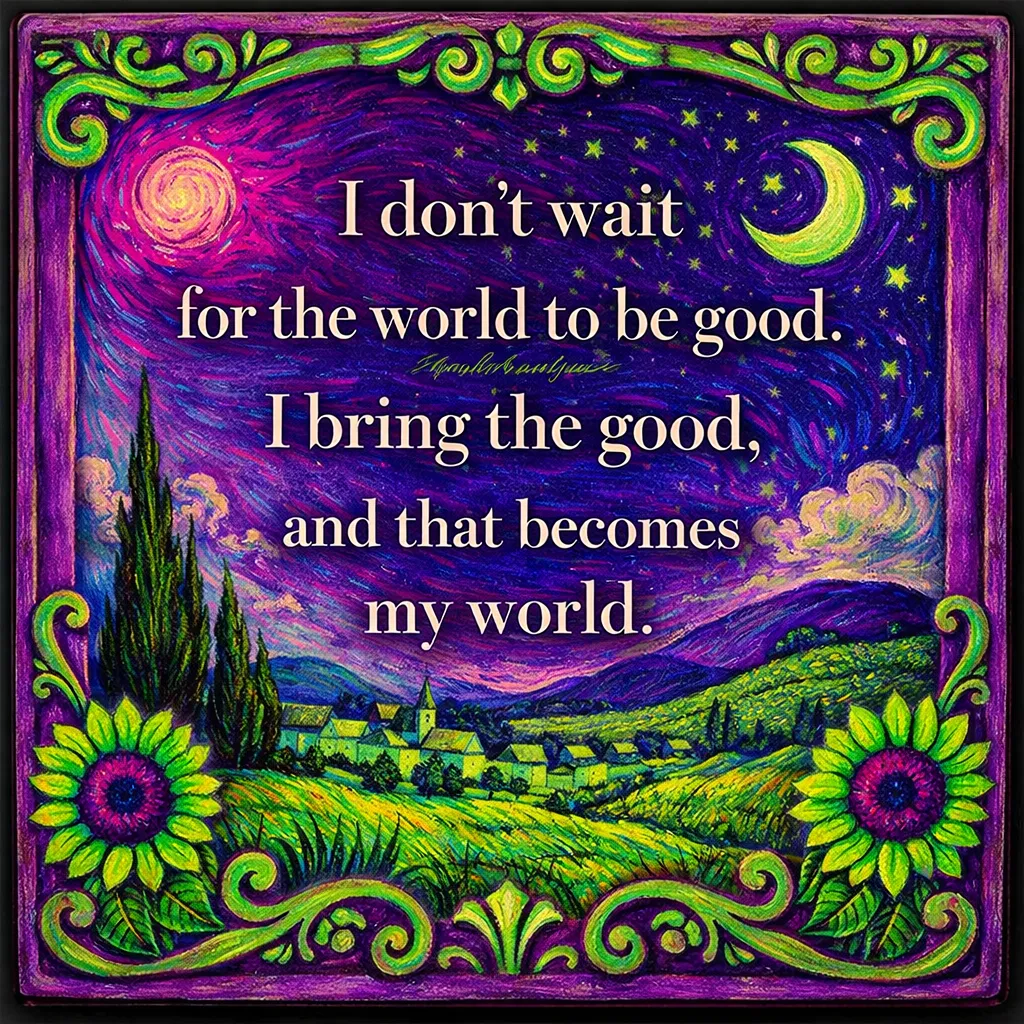

I Lost Everything In 2008. Here's How Rewiring My Brain Gave Me Everything Back.
Where Science Meets Soul
I remember the exact moment I knew it was all gone.
Not just the money. Not just the house. All of it. The career I had spent years building. The friends I thought were permanent. The version of myself I had carefully constructed. In 2008, the ground beneath me simply disappeared, and I fell in a way I did not know a person could fall and still be standing.
I want to be honest with you about what that year looked like, because I think we talk about rock bottom like it’s a dramatic movie moment. Like there’s a score playing and a turning point you can see coming. There wasn’t. It was just quiet. Terrifyingly quiet. It was waking up in the morning and not knowing who I was anymore. It was lying in bed counting the ways everything had gone wrong. It was the specific loneliness of losing people at the same time you lose yourself, because when the status disappears, some people disappear with it.
For over a year, that was my life.
THE SCIENCE OF HITTING BOTTOM
What Collapse Actually Does to Your Brain
Here is what nobody told me in 2008: what I was experiencing wasn’t just emotional. It was neurological.
When we experience sustained stress, loss, and fear, our nervous system shifts into a state of chronic survival mode. The amygdala, the brain’s threat-detection center, becomes hyperactive. Cortisol floods the body. The prefrontal cortex, the part responsible for rational thought, creativity, and future planning, essentially goes offline.
I wasn’t broken. My brain was doing exactly what it was designed to do: protect me. But it was protecting me so fiercely that I couldn’t think clearly, couldn’t imagine a future, couldn’t see any way forward.
I was surviving. But I had forgotten, completely, how to live.
And here is what I know now that I wish I had known then: the same neuroplasticity that kept me stuck was also the key to getting free. The brain that had wired itself around fear and loss could be rewired. Not quickly. Not perfectly. But deliberately, consistently, and with the right tools.
THE FIRST SHIFT
Learning to Regulate Before I Could Rebuild
I did not wake up one morning and decide to transform my mindset. That is not how this works. What actually happened was far more unglamorous.
I started noticing my body.
Not in a spiritual, elevated way at first. In a desperate, this-cannot-go-on way. I noticed that my chest was constantly tight. That I was holding my breath without realizing it. That my shoulders had lived around my ears for so long they had forgotten any other position. My nervous system was in a state of constant alarm, and that alarm was running my entire life.
Nervous system regulation is one of the most underrated tools for personal transformation, especially for women who have been through sustained loss. When your body is in chronic stress response, no amount of positive thinking or goal-setting will stick. The body has to feel safe before the mind can believe in a new story.
For me this looked like: slow, deliberate breathing when the panic rose. Placing my hand on my chest and saying out loud, “I am safe right now.” It looked like walking, slowly, every single morning, not to burn calories or achieve anything, but because movement is one of the most evidence-based ways to discharge stress hormones from the body.
It looked embarrassingly small. And it changed everything.
Slowly, over weeks, something shifted. The tightness in my chest loosened slightly. I could take a full breath. And in that small crack of space, something else crept in.
The tiniest seed of a question: What if this is not the end?
FAITH MEETS NEUROSCIENCE
When I Stopped Looking for God Outside Myself
I need to tell you something about my faith, because it is inseparable from this story.
I grew up understanding God as something external. Something I had to reach for, qualify for, be worthy enough to receive. And when I lost everything, I felt, on top of everything else, abandoned. Like I had been failed by the very thing I believed in.
But in that long, quiet year of rebuilding, something began to shift in how I understood the divine. I started to grasp, slowly and then all at once, that God was not somewhere I needed to get to. God was what I was made of. My faith in myself and my faith in something greater were not two separate things. They were the same thing.
This was not a rejection of science. This was where science and spirituality became one conversation for me.
Because here is what neuroscience confirms: the mind does not distinguish between what is vividly imagined and what is real. When we visualize with emotion, with intention, with felt sense, the brain activates the same neural pathways as if the experience were happening in the present moment. The body begins to produce the chemistry of the future you are imagining.
And here is what my faith confirmed: we are not separate from the source of creation. We are expressions of it. When I pray, when I set intention, when I visualize the life I am called toward, I am not asking for something from the outside. I am activating something from within.
THE PRACTICE THAT CHANGED EVERYTHING
Visualization: Seeing It Before I Could Believe It
I want to be transparent with you: when I first started visualization work, I felt like a fraud doing it.
I was sitting in a rented room, with very little money, no career, and the wreckage of a life that had collapsed around me, and I was closing my eyes and trying to see something different. It felt absurd. It felt like lying to myself.
But I kept coming back to the neuroscience. The research on mental rehearsal is extraordinary. Studies on athletes show that visualizing a performance activates the same motor neurons as physically performing it. Research on recovery from illness shows that patients who use guided visualization have measurably better outcomes. The brain, when given a vivid, emotionally charged image of a desired future, begins to organize itself around that image.
So I made a decision. Every morning, before I did anything else, I would spend ten minutes in visualization. Not a vague “I want things to be better” daydream. A specific, sensory, emotionally engaged practice.
I saw myself in work that lit me up. I felt the security of financial stability in my body — not just thought about it, but felt it. I imagined myself as a mother who showed up whole. I held the version of me who had turned this devastation into a direction.
At first it felt hollow. Then it felt possible. Then, one day, it felt inevitable.
I did not attract a better life by wishing for one. I built a better life by becoming, neurologically and spiritually, someone who could hold one.
THE ONGOING WORK
Transformation Is Not a Destination. It Is a Direction.
I want to be careful not to package this story too neatly, because life does not allow for that.
My transformation is not complete. I do not believe it ever will be, and I have stopped wanting it to be. Life continues to demand evolution. New losses arrive. New fears rise. The practices that saved me in 2008 are practices I return to constantly, not because I am still broken, but because I am still growing.
What has transformed completely is not my circumstances, although those have shifted profoundly. What has transformed is my relationship to myself. The story I tell when things get hard. The speed with which I can regulate my nervous system when fear arrives. The absolute, unwavering knowing that the divine is not something I have to earn. It is something I already am.
That is the mindset shift that changed everything. Not one moment. Not one method. A daily, ongoing, sometimes frustrating, always worth it commitment to seeing myself and my life differently.
I am not who I was in 2008. But I am grateful to her. She did not give up. She just did not know yet what she was becoming.
YOUR NEXT STEP
One Small Thing You Can Do Today
If you are in your own version of 2008 right now, or even just that nagging, restless feeling that you are meant for something more and you cannot figure out why you cannot get there, I want to leave you with this:
You do not have to overhaul your life today. You just have to do one thing.
Tonight, before you sleep, put your hand on your chest. Take three slow, full breaths. And ask yourself, quietly and without judgment: What would I choose to believe about myself if I knew it was safe to?
Write down whatever comes. Do not edit it. Do not judge it. Just let it be true for five minutes.
That is nervous system regulation. That is the beginning of subconscious reprogramming. That is where science meets soul.
And that one small thing? That is how every transformation begins.